
Anyone who uses an airbrush finds out soon enough: atomised paint doesn’t disappear. It settles. On the model, on the table, on the furniture and, if you’re not careful, in your lungs.
And the problem doesn’t end when you stop spraying. While the paint is wet it’s a magnet: dust, lint and tiny particles floating in the air, practically invisible, land on it and stay there, trapped. You notice once the paint is dry, usually on the most visible part, when it’s too late. That’s why extraction matters during painting, but even more afterwards: the model stays in the booth, with the air moving, until the paint is dry.
I built my first spray booth about twenty-five years ago, and I’ve never stopped tinkering with it since.
This is episode zero: the story of the booth so far, before we get to the water-curtain cascade.
How it started
A frame of wooden strips, clear walls, a completely open front and extraction at the back: a fan in the rear wall pulling the air out and sending it outside through a flexible hose. Simple, and for quite a few years it did its job.
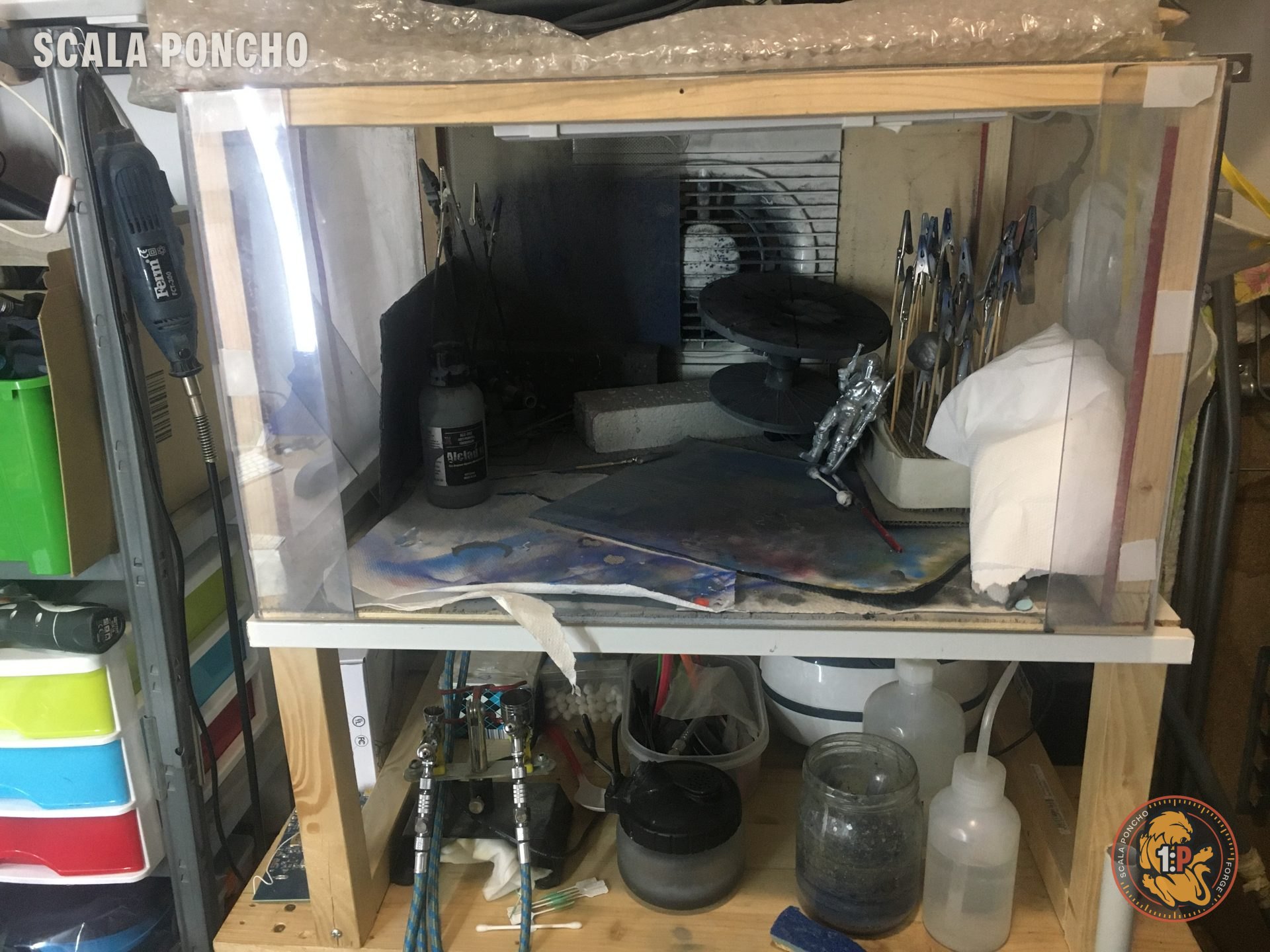
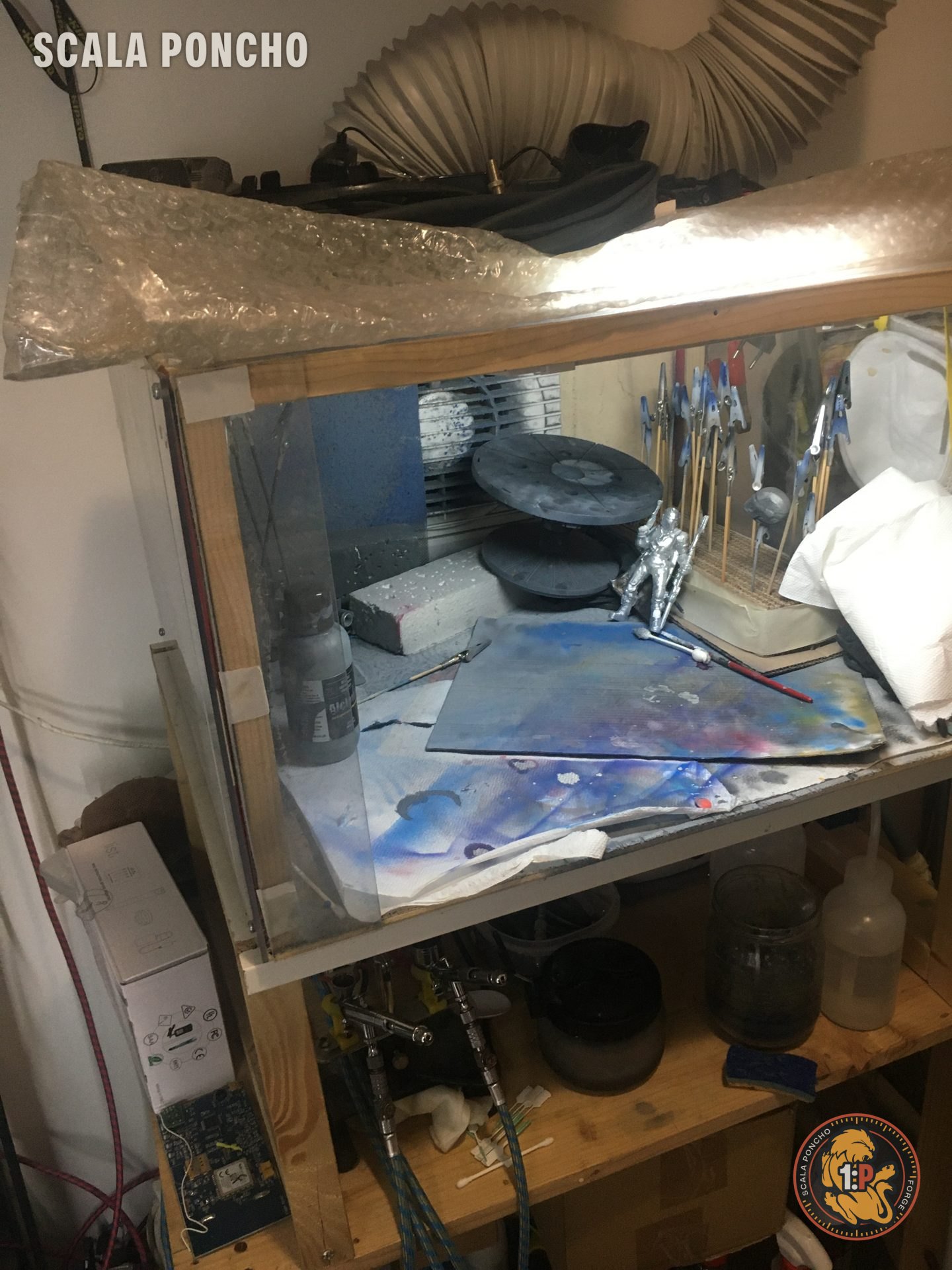
Twenty-five years of changes
A home-made booth is never finished, it’s just on its current version. Over the years I’ve changed:
- the front closure: several systems, ending up with a sort of curtain;
- the interior lighting, redone several times;
- the filters, trying out different systems.
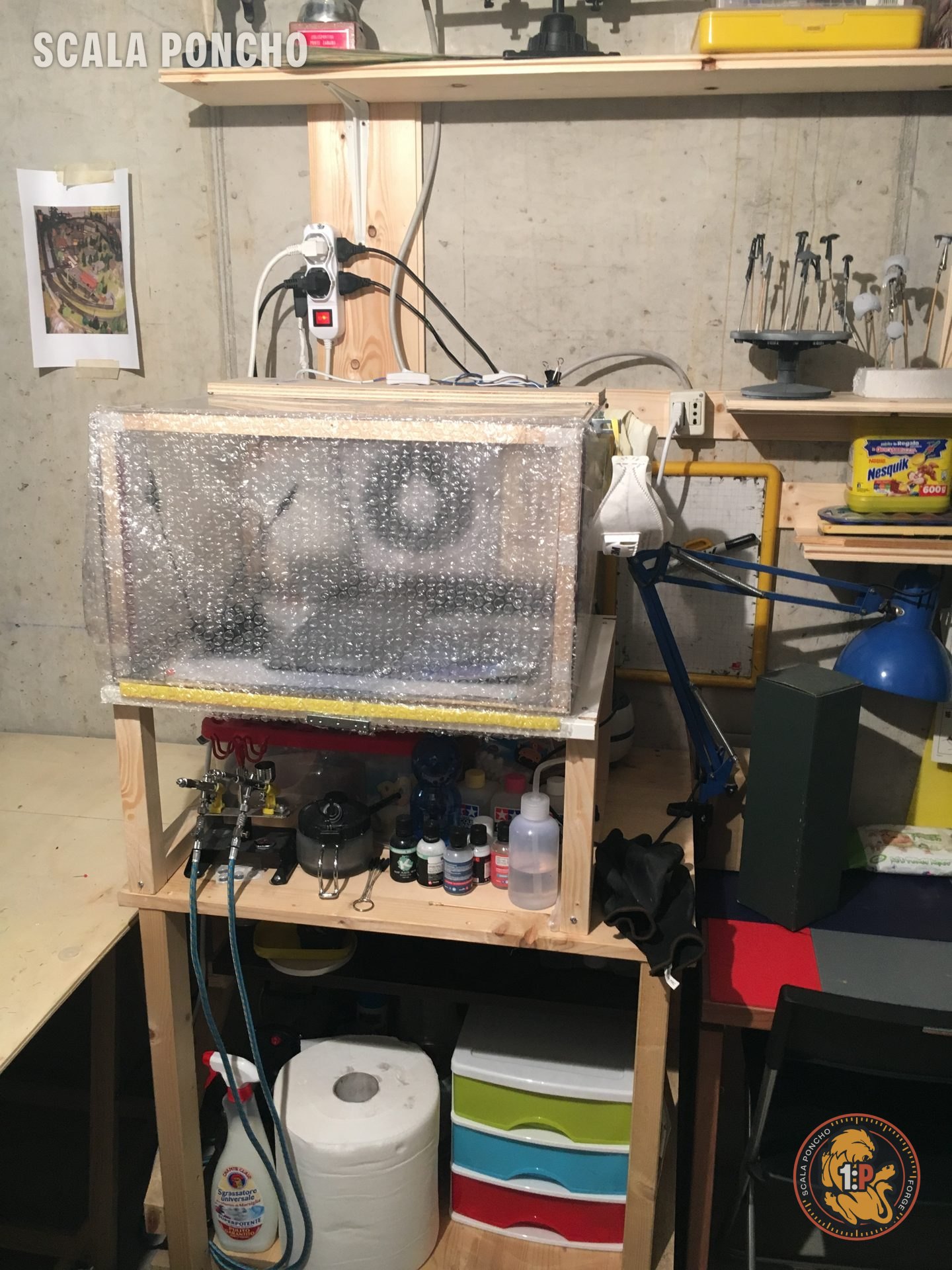
Where we are now
Today the extraction is at the top, and it works together with a water-curtain cascade to take advantage of the Bernoulli effect. The goal is for the overspray to end up in the water, instead of in the filters or in the workshop air.
The cascade already has a working prototype, built entirely by hand, and a version designed in FreeCAD to be 3D printed. Those are the next episodes: we start with the hand-made prototype.
Twenty-five years for a box that sucks. If there’s one project that sums up this workshop, it’s this one.