
Anyone who builds models, of any kind, fights a sneaky enemy every day: the shadow. The one cast by your hand on the part, by your head bent over the bench, by the desk lamp that brilliantly lights the wrong side. Working on a one-millimetre detail with half the part in shade is the quickest way to glue the right thing in the wrong place.
The classic fix is adding lamps, one for every shadow. Mine was different: an arch of light spanning the bench from one side to the other, with light coming from above and from every direction at once. If light comes from everywhere, shadows don’t know where to go.
The first version (2021)
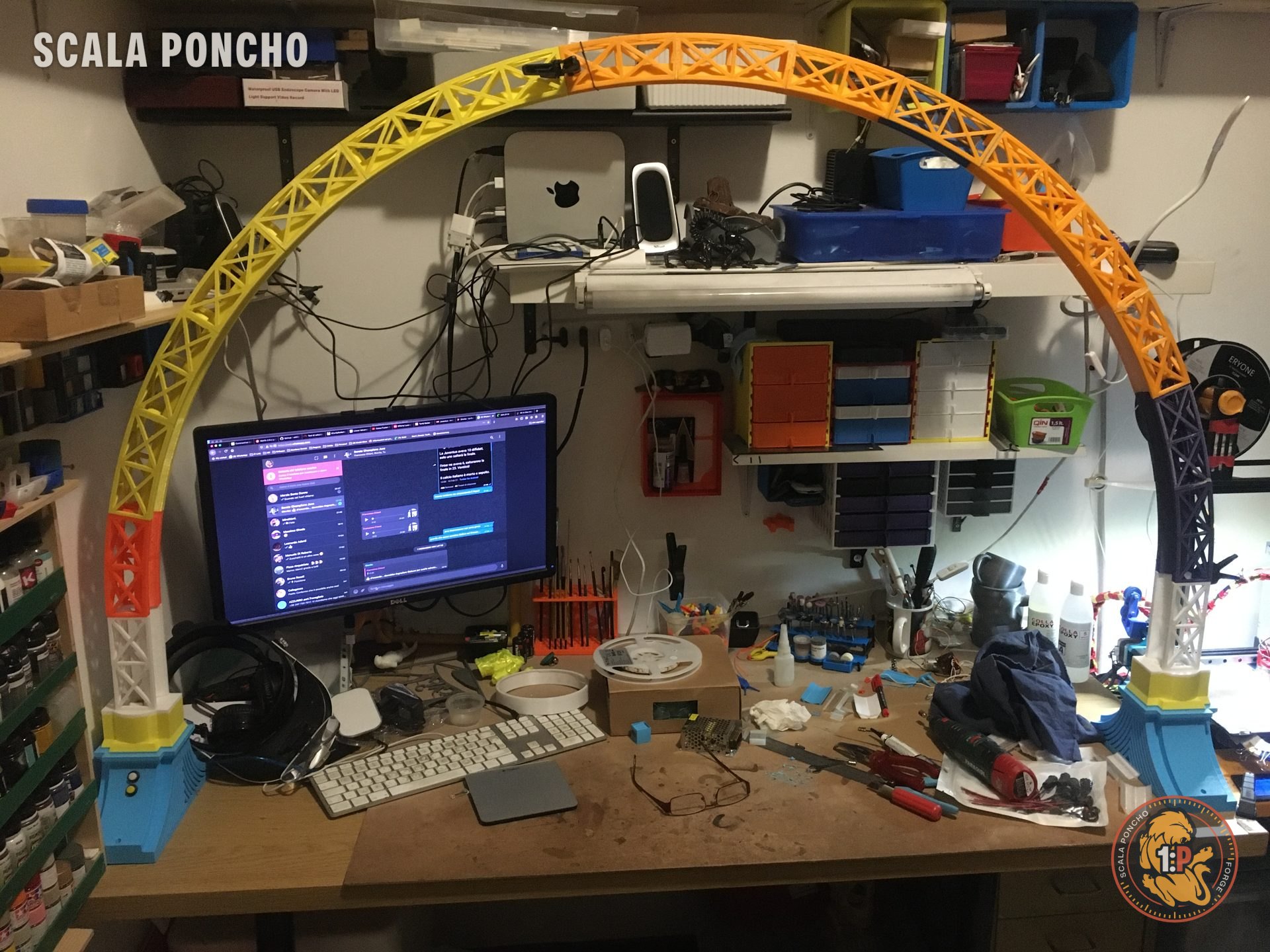
February 2021. The arch is a truss structure, printed in segments, mounted over the desk and resting on two blue feet at the sides. In the first photo it’s just been assembled, still in the filament colours: more fairground ride than workshop gear.
Four days later it already looked different: painted, with a gradient from light blue to grey, and with the LED strip fitted along the inside of the arch.
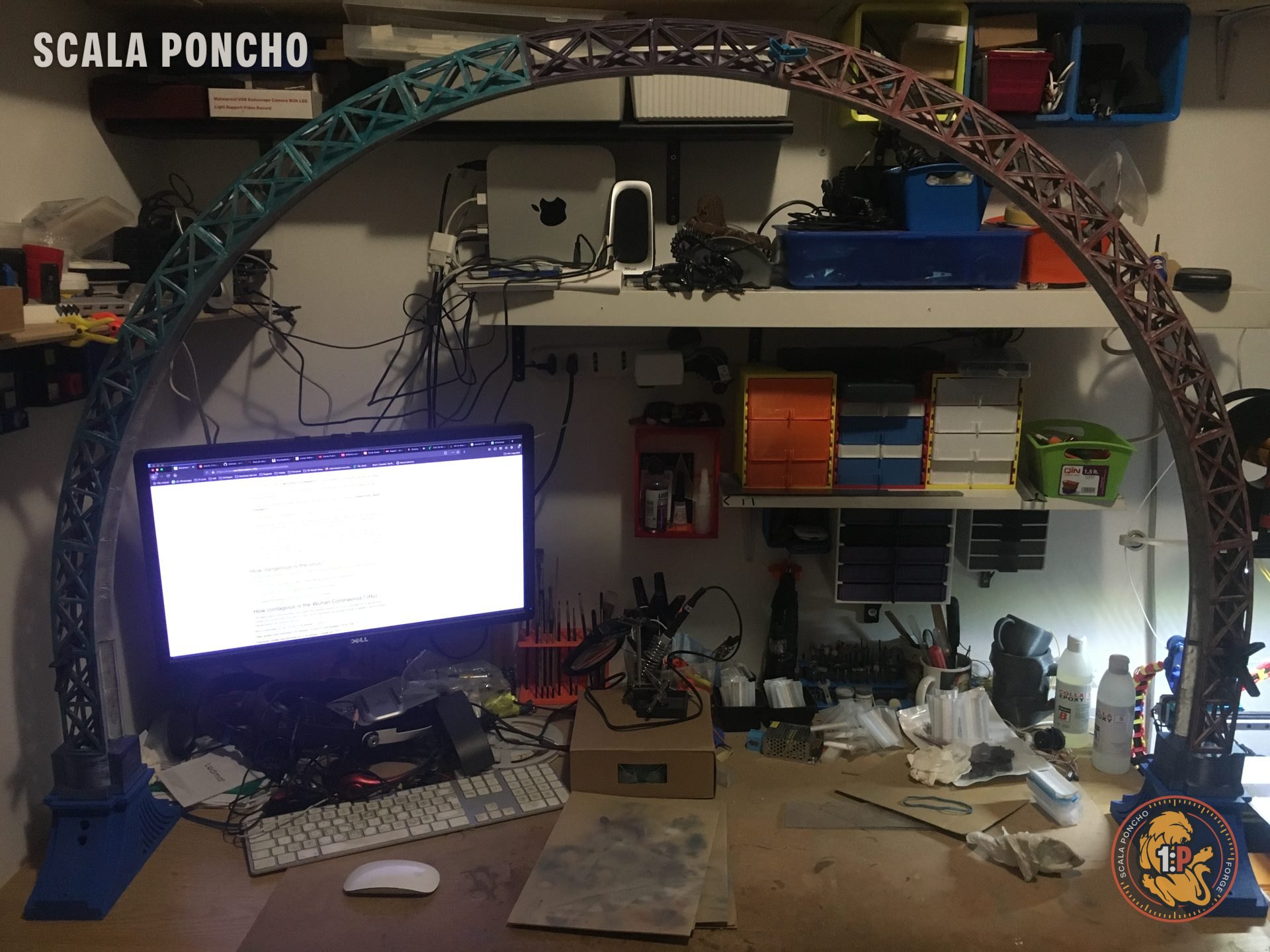
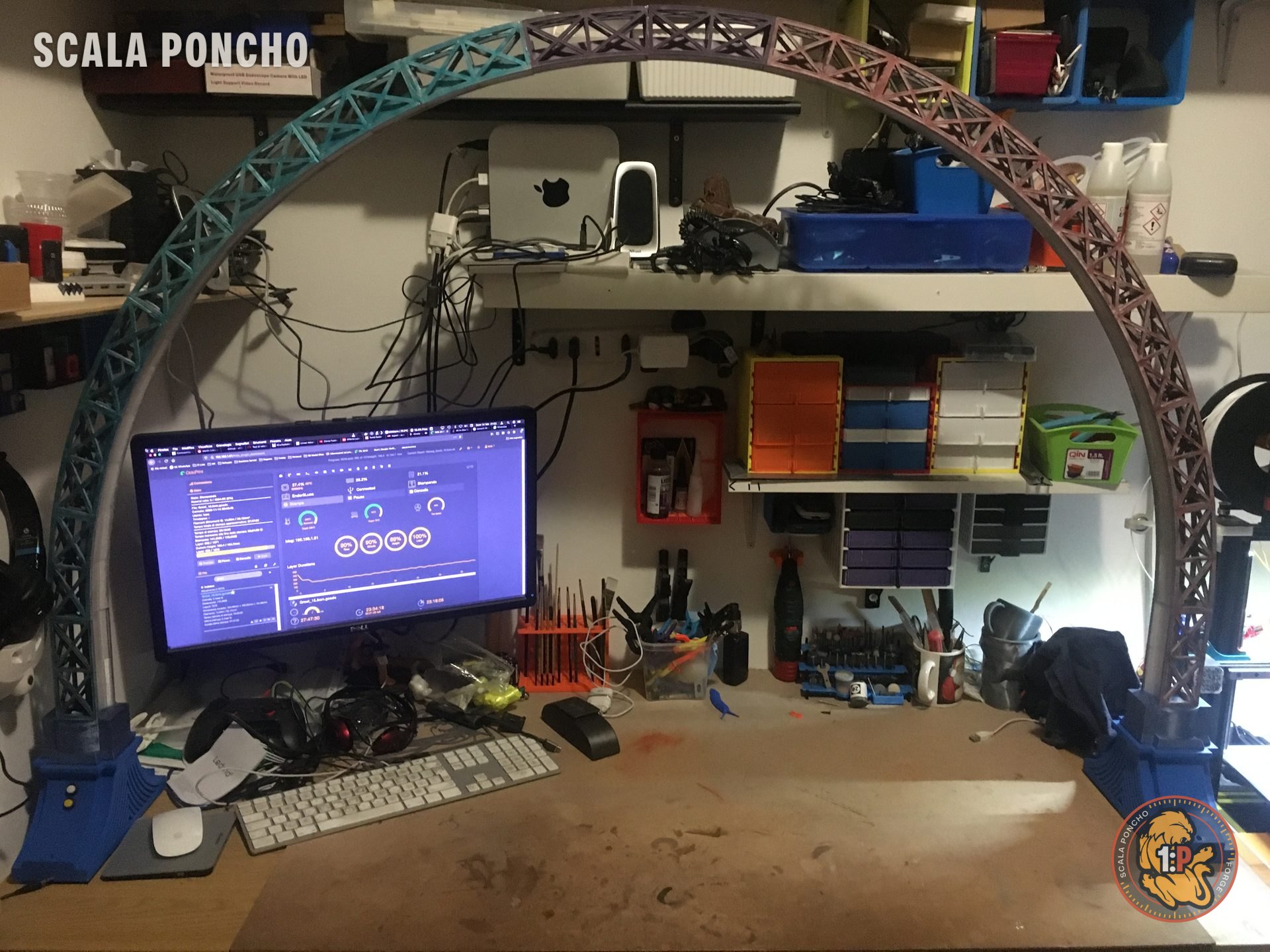
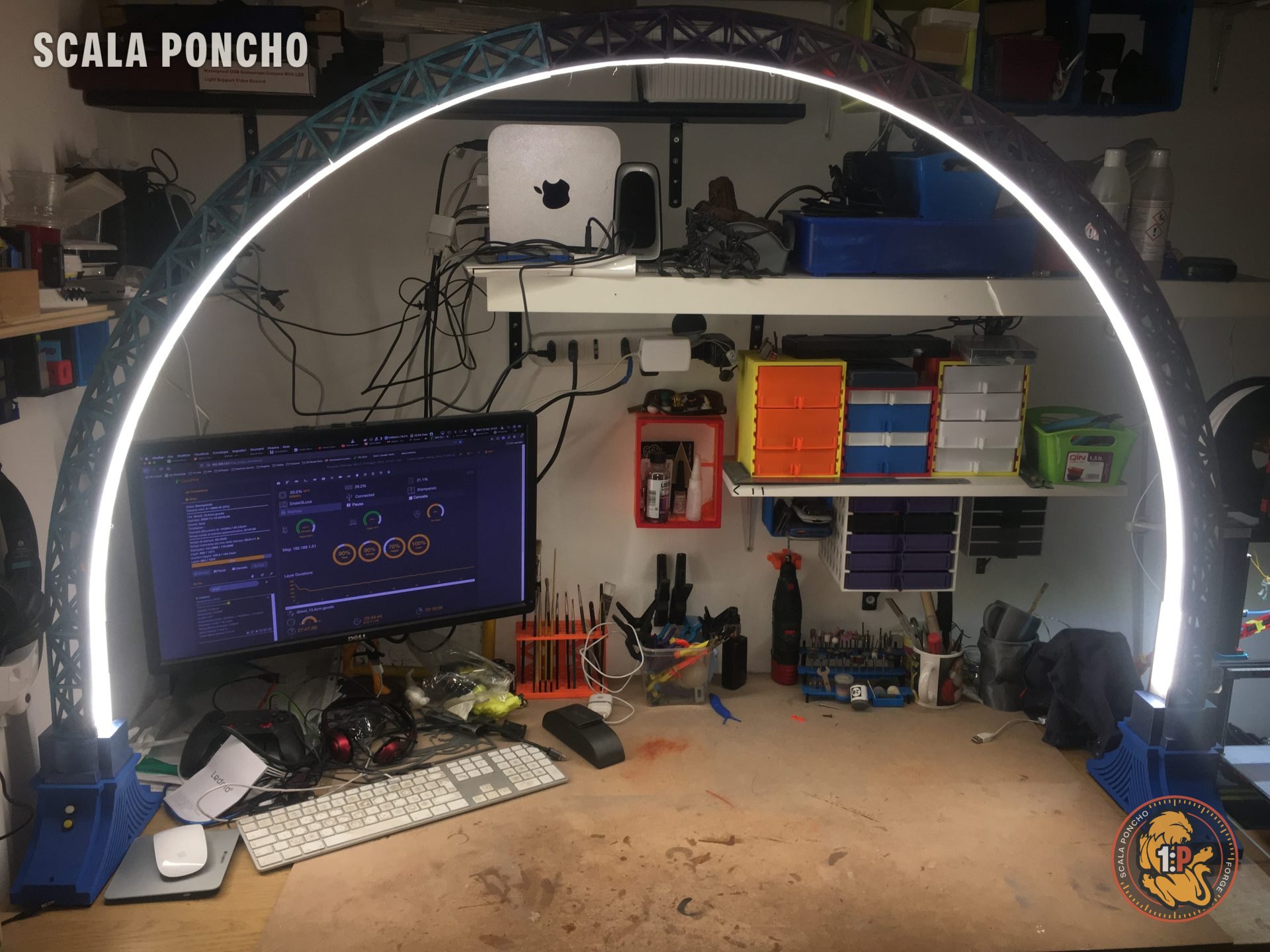
It worked for five years. Which, for a printed object hanging over a modeller’s head, is a very respectable age.
The second version (2026)
Five years later: new print, new colour. Red, sitting on an orange stand. Meanwhile the bench changed too: pegboards on the walls, printed drawer units, tools hanging each in its place. All much tidier, at least in the photos.
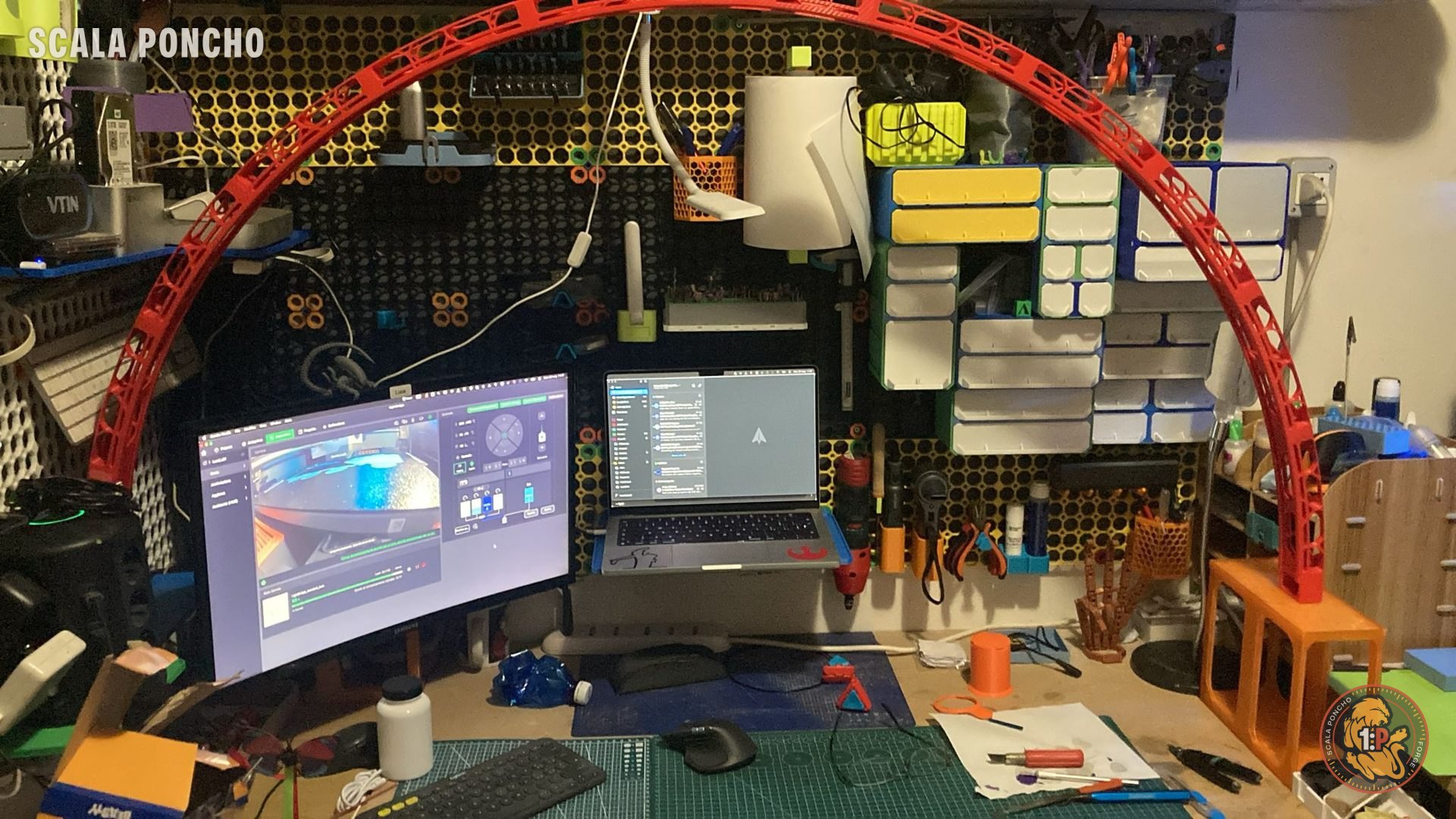
Still a truss structure, but slimmer. And now the light changes colour: white for working, blue for showing off when someone walks into the studio.
What I learned
- Light coming from above and from several directions beats any adjustable lamp.
- An arch over the bench has to be designed together with the cables, the hands and the head of whoever works underneath it.
- Five years is a long time for a printed object, but not long enough to stop wanting a better one.
The shadows haven’t disappeared completely. But now, when I get a part wrong, I can’t blame the lighting any more.